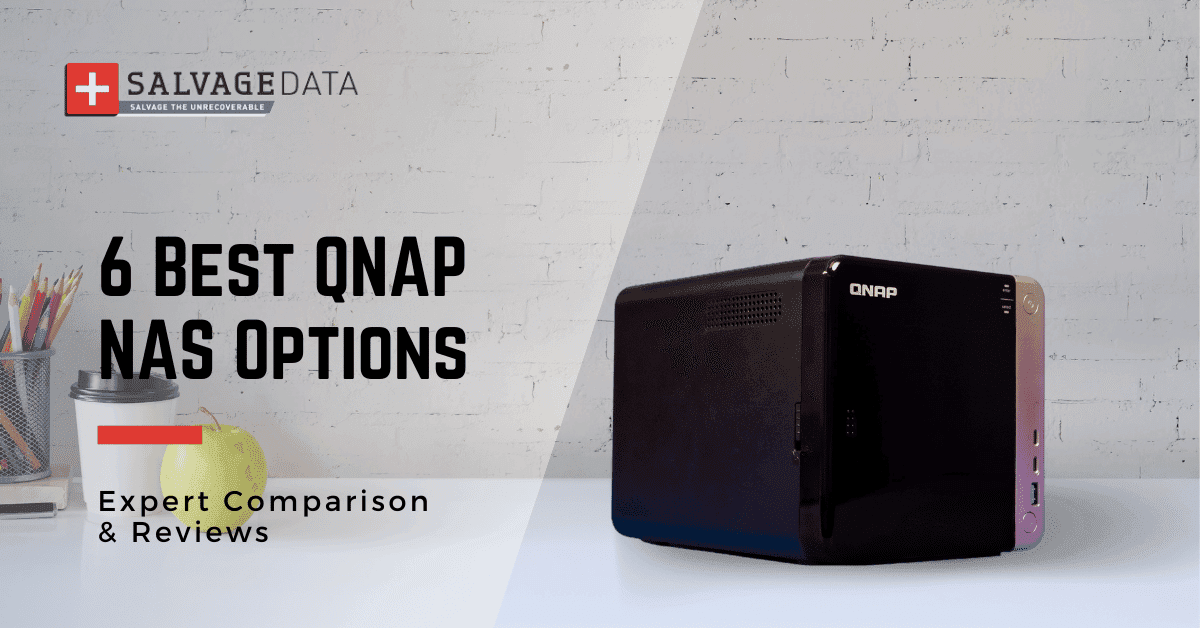

As small businesses expand and home users handle ever-increasing volumes of data, the need for scalable data storage solutions has never been more crucial. A storage upgrade isn’t just about enhancing capacity or reliability—it’s about centralizing setups to boost performance, ease of sharing, and security.
This article simplifies the selection process by presenting the best QNAP NAS options for various needs.
What Is a NAS System
Network-attached storage, or NAS, represents a data storage and management device that allows information to be shared among diverse groups of users and varied clients simultaneously. Data can be accessed through a network or via the internet.
Being flexible and scalable, NAS servers can easily adapt to growing storage needs, allowing you to add more space to what you already have.
It’s like having a private cloud right in the office — but NAS is faster, less expensive, and can provide you all the benefits of a public cloud on-site without limiting your control over the data.
Among other things, NAS systems also provide excellent file synchronization between different machines and devices. NAS storage is an extremely reliable solution for data backup as well.
As for data recoverability, NAS servers offer much faster data recovery in case of a system failure or unintentional deletion of an important file in comparison to popular cloud services, such as Dropbox or OneDrive.
What is QNAP
QNAP stands for Quality Network Appliance Provider, and they are an award-winning storage device manufacturer, among other network solutions.
With innovative software and a compact yet attractive hardware design, QNAP offers a wide range of NAS devices for all purposes and budgets.
Since the brand heavily invests in research and development, users can be sure that a QNAP acquisition will be a reliable and “future-proof” choice, as they promise.
Best QNAP NAS Options for 2025
QNAP has every NAS user type in mind. Their product portfolio ranges from personal storage needs to small and midsize businesses (SMBs), and enterprise system server rooms.
Here we present a list of the six best QNAP products that are worth checking out in 2025, plus an option for high-performance needs:
Best Overall: QNAP TS-464
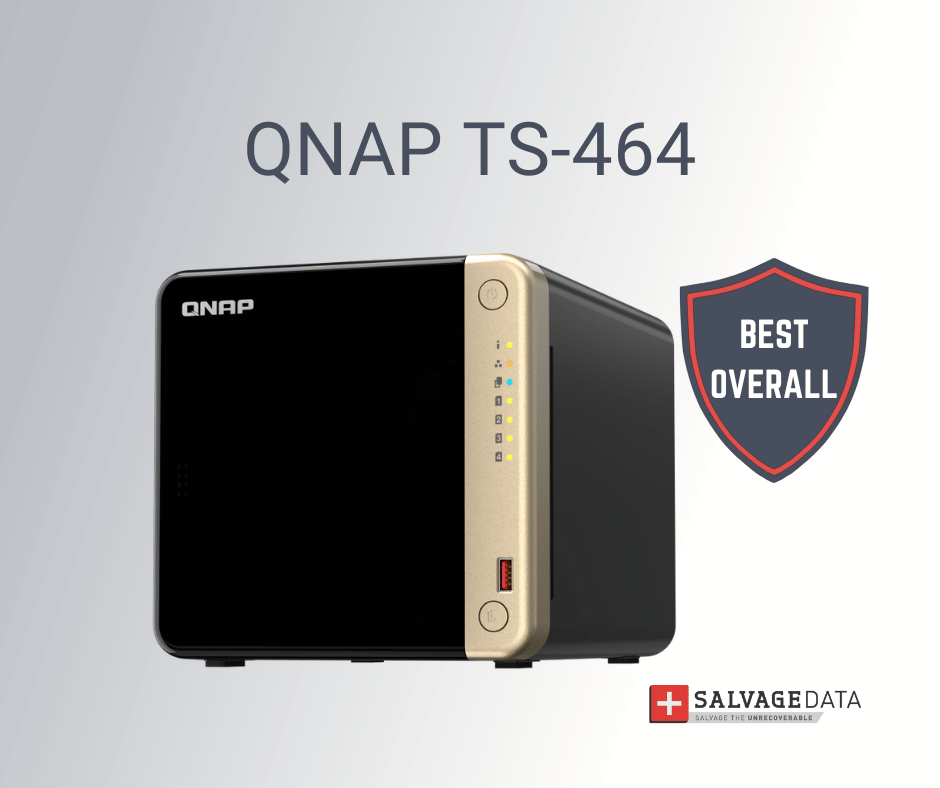
The QNAP TS-464 is a high-performance NAS designed for home and small business users. Powered by an Intel Celeron N5105/N5095 CPU, it features 4 bays, 8GB of expandable RAM, and dual 2.5GbE LAN ports. It’s ideal for multimedia streaming, virtualization, and advanced backup solutions.
Advantages:
- Quad-core Intel processor ensures smooth multitasking.
- Four bays provide flexible storage expansion.
- Dual 2.5GbE LAN ports offer faster file transfers and network speeds.
- HDMI output supports media streaming directly to a display.
Disadvantages:
- Higher price compared to entry-level models.
Best Runner-up: QNAP TS-262
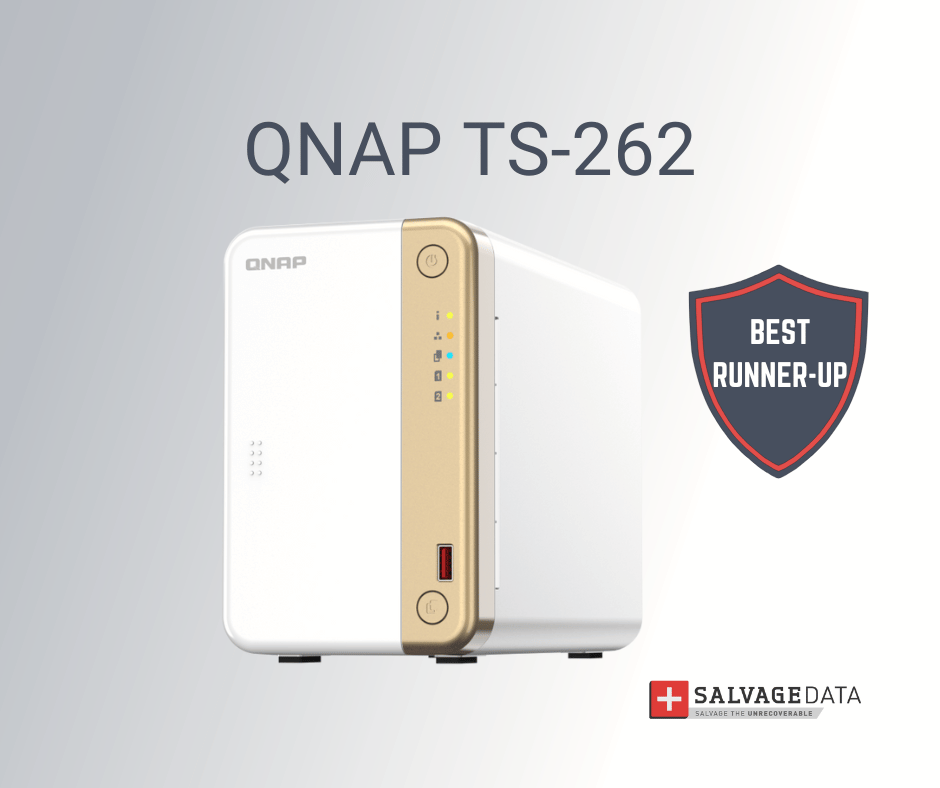
The QNAP TS-262 is a compact and versatile NAS with 2 bays, powered by an Intel Celeron N4505 CPU and 4GB of expandable RAM. It’s perfect for beginners seeking a future-proof solution with multimedia capabilities.
Advantages:
- Entry point with solid performance.
- Dual 2.5GbE LAN ports for faster connectivity.
- Expandable RAM for improved multitasking and scalability.
Disadvantages:
- Limited to two bays, which may restrict long-term storage expansion.
Best Budget: QNAP TS-233
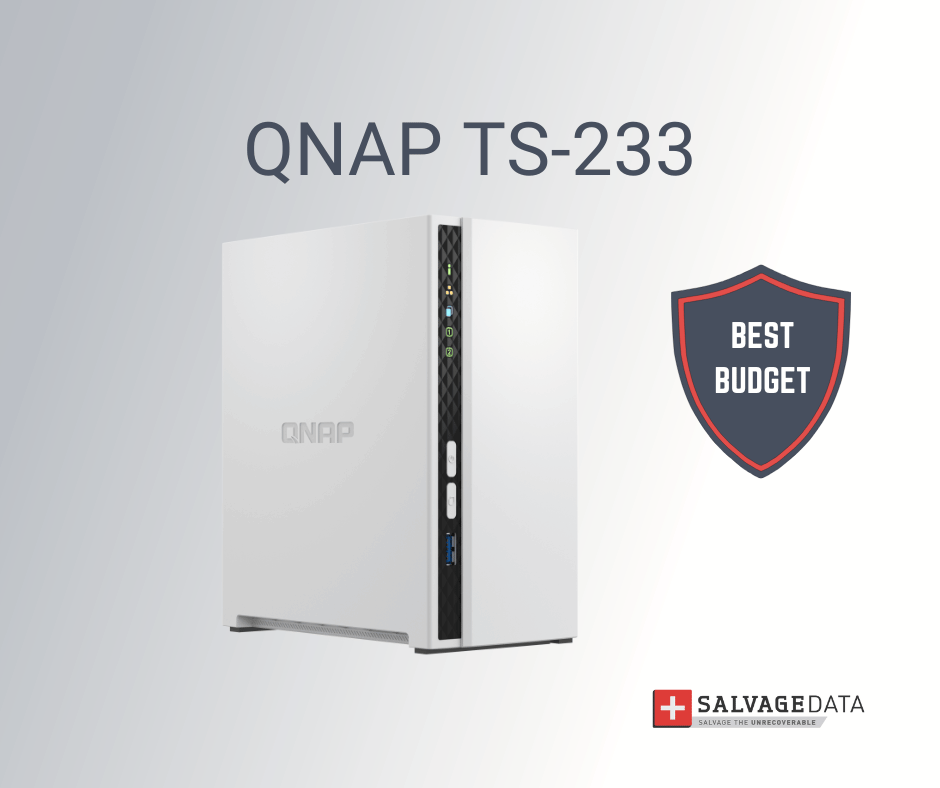
The QNAP TS-233 is a NAS solution cheaper than other options that features an ARM Cortex-A55 CPU, 2 bays, and 2GB of RAM. It’s designed for basic storage needs like backups and file sharing, making it an excellent choice for budget-conscious users.
Advantages:
- Less expensive for tight budgets.
- Compact design suitable for small spaces.
- Energy-efficient ARM processor reduces power consumption.
Disadvantages:
- Limited processing power and a single Gigabit LAN port may not suit demanding tasks.
Best for Home Use: QNAP HS-264

The QNAP HS-264 is a fanless NAS with 2 bays and dual HDMI outputs, powered by an Intel Celeron N5105/N5095 CPU. Its silent operation and multimedia capabilities make it ideal for home entertainment setups.
Advantages:
- Fanless design ensures quiet operation in living spaces.
- Dual HDMI outputs support high-resolution streaming up to 4K.
- Compact design fits seamlessly into home environments.
Disadvantages:
- Limited to two bays, which may not meet larger storage needs.
Best Value: QNAP TS-453E
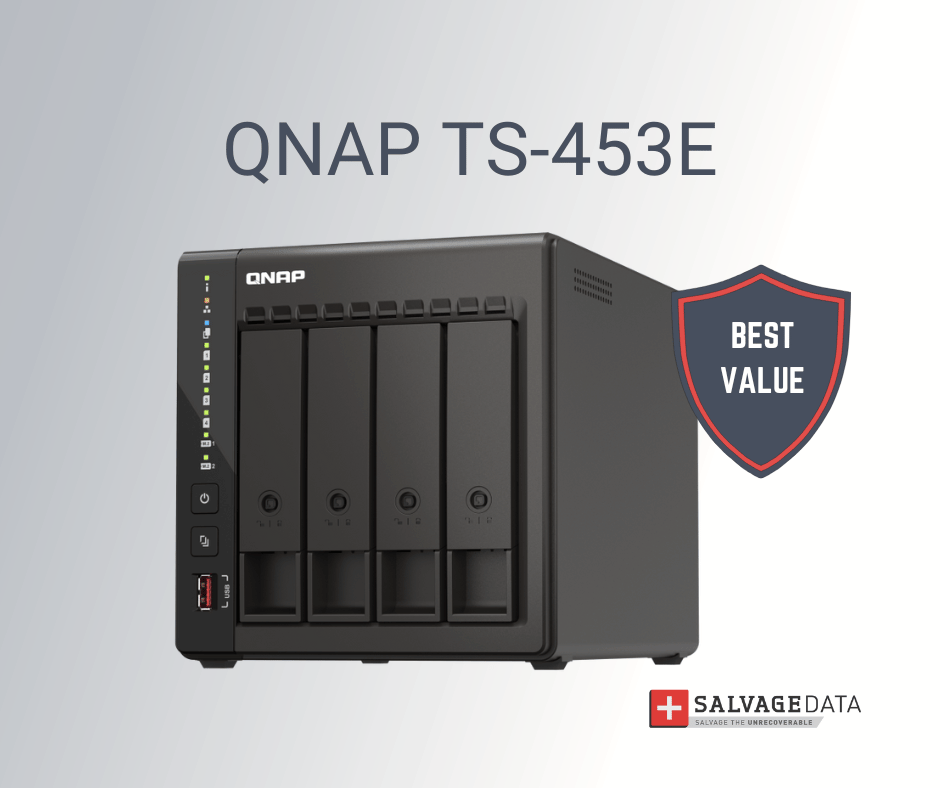
The QNAP TS-453E is a cost-effective NAS featuring an Intel Celeron J6412 CPU, four bays, and dual Gigabit LAN ports. It’s a versatile option for small businesses or advanced home users who need robust features on a budget.
Advantages:
- Four bays provide ample storage capacity with room for expansion.
- SSD caching improves performance for frequently accessed data.
- Supports virtualization and advanced backup features like snapshots.
Disadvantages:
- No multi-gig LAN ports, limiting network speed upgrades.
Best Capacity: QNAP TVS-h874
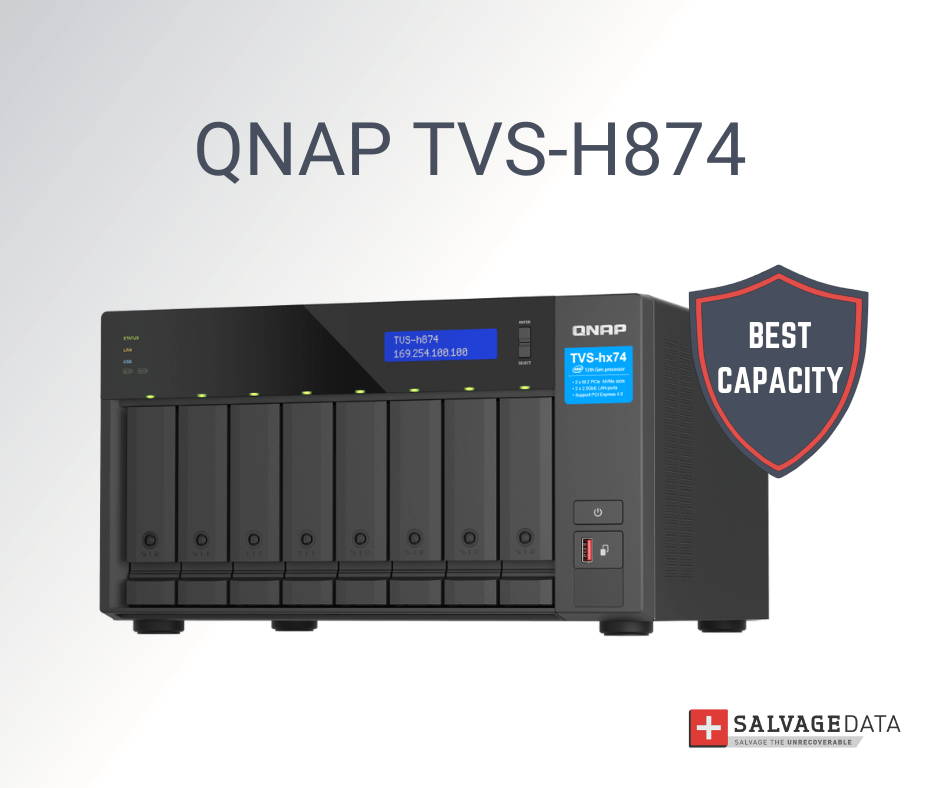
IThe QNAP TVS-h874 is a powerhouse NAS designed for enterprise-level applications or professionals with demanding workloads. It features up to 8 bays, dual PCIe slots, dual M.2 NVMe SSD slots, and Intel Core i5/i7 CPUs.
Advantages:
- Powerful Intel Core processors handle intensive tasks like video editing or virtualization.
- Dual PCIe slots allow GPU installation or additional network cards.
- M.2 NVMe SSD slots enable ultra-fast caching or tiered storage setups.
Disadvantages:
- High cost makes it less accessible to general users or smaller setups.
(Bonus) High Performance: QNAP TVS-H1288X
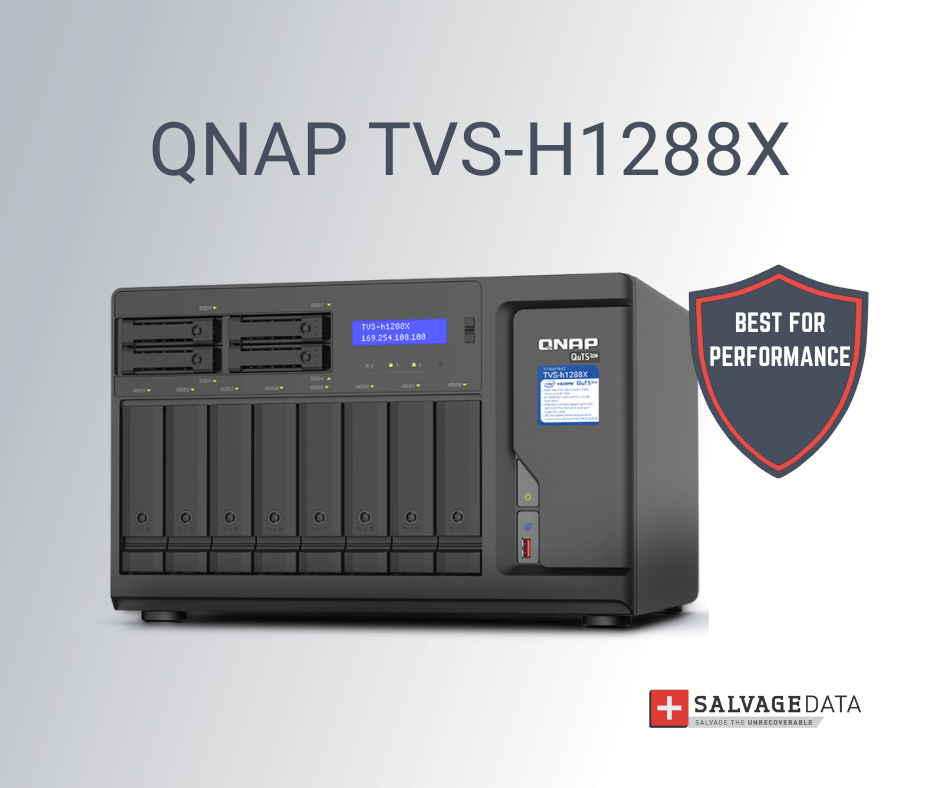
The QNAP TVS-h1288X is designed for professionals needing extreme performance for tasks like video editing or Plex media streaming. It features an Intel Xeon W CPU, up to 12 bays, dual M.2 NVMe SSD slots, and dual-port SFP+ (10GbE) networking.
Advantages:
- Enterprise-grade Xeon processor ensures exceptional performance under heavy workloads.
- Dual SFP+ ports provide ultra-fast networking capabilities at 10GbE speeds.
- A large number of bays support extensive storage configurations.
Disadvantages:
- Premium pricing limits accessibility to casual users or smaller environments.
Choosing the right QNAP
Selecting the best QNAP NAS device depends on your specific needs, whether you’re a home user, a small business owner, or an enterprise professional. SalvageData experts compared QNAP options for those looking for stability, scalability, or capacity.
Key considerations for choosing a QNAP NAS:
Purpose and Use Case
- Home Users: Look for multimedia features like HDMI outputs for streaming and quiet operation for living spaces.
- Small Businesses: Focus on scalability, multi-bay options, and advanced backup solutions.
- Enterprise Needs: Opt for high-capacity models with powerful processors and multi-gig LAN ports for intensive workloads.
Storage Capacity
- Determine how much data you need to store now and in the future. Models range from single-bay devices to 16-bay enterprise solutions.
Performance Requirements
- For basic file sharing, ARM-based models are sufficient. Intel-powered models are better suited for demanding tasks like virtualization or 4K video editing.
Network Connectivity
- If you need faster file transfers, choose models with multi-gig LAN ports (e.g., 2.5GbE or 10GbE).
What to do in case of data loss
Even the most reliable NAS devices are not immune to data loss caused by disk failures, media corruption, or accidental deletion. If you encounter such issues:
- Avoid attempting DIY recovery as it may worsen the damage.
- Contact SalvageData specialists for a free evaluation and professional data recovery services.